
Executive summary
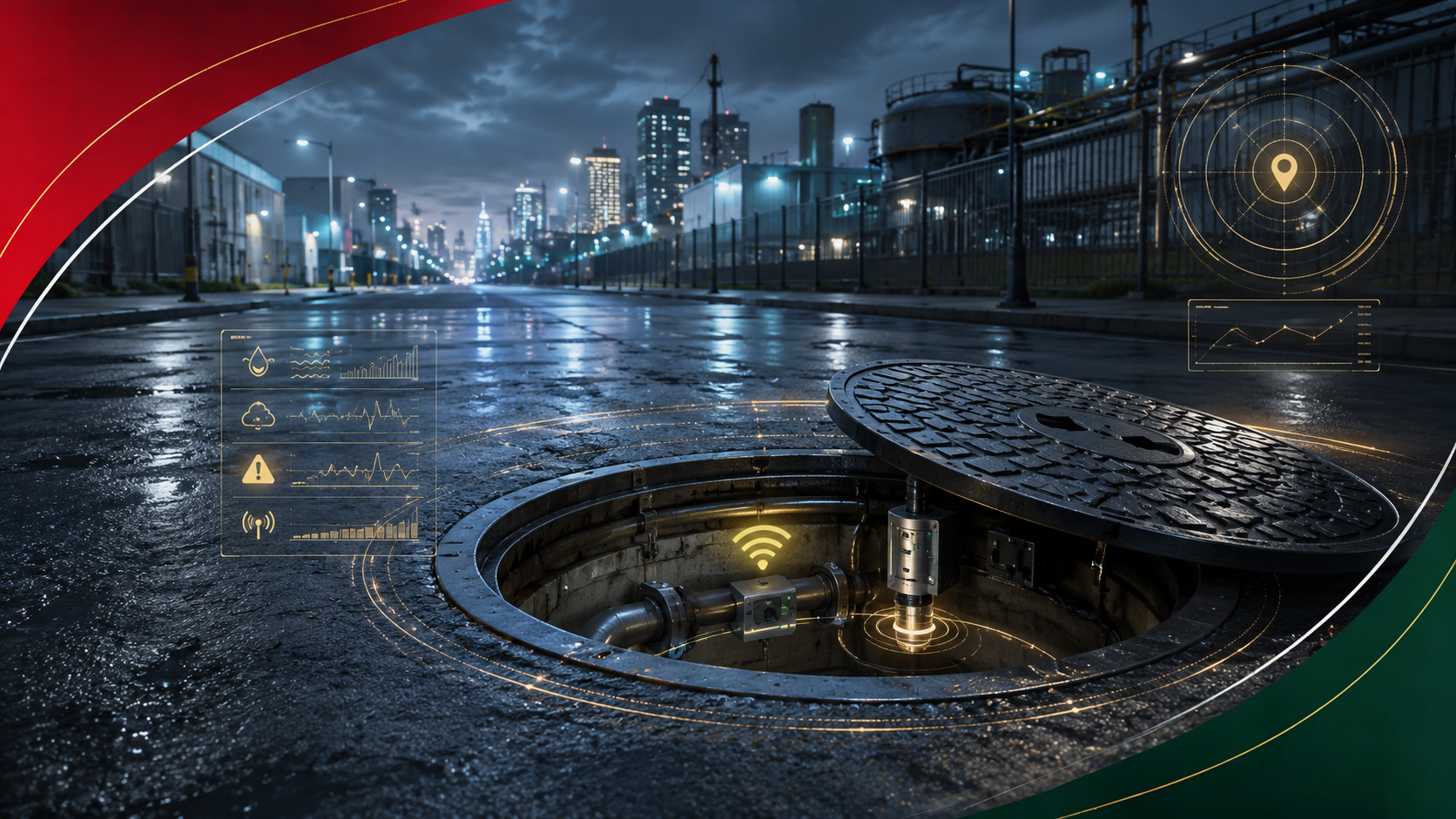
IoT sensors, AI analytics, wireless communication, and dashboards turn reactive maintenance into proactive asset management.
Introduction
Underground utility infrastructure is one of the most critical yet least visible assets in every modern city.
Millions of manholes provide access to sewer systems, stormwater networks, electrical cables, fiber optic lines, gas pipelines, and water distribution systems.
Despite their importance, most manholes are still inspected manually, making them vulnerable to flooding, unauthorized access, hazardous gas accumulation, cable theft, structural failures, and delayed maintenance.
What the system does
A smart manhole monitoring system combines IoT sensors, AI-powered software, wireless communication, and real-time analytics to continuously monitor underground assets without requiring manual inspections.
Key points
- Real-time alerts
- Predictive maintenance recommendations
- Historical performance analytics
- Cloud or on-premise dashboard visibility
Why traditional inspections are no longer enough
Key points
- Manual inspections are time-consuming and expensive
- Problems remain undetected between inspection intervals
- Dangerous gases expose maintenance workers to serious risks
- Flooding damages infrastructure before anyone notices
- Cable theft is often discovered too late
- Maintenance becomes reactive instead of preventive
Core components
Key points
- Smart sensor units for water level, flood, temperature, humidity, gas, tilt, vibration, cover open/close, and intrusion detection
- Wireless communication designed for underground conditions
- AI-powered analytics and alerting
- GIS-enabled monitoring dashboard
- Secure multi-user access and enterprise integration
Editorial note
Business benefits
Key points
- Up to 70 percent reduction in manual inspections
- Faster incident detection
- Lower maintenance costs
- Improved worker safety
- Reduced downtime
- Longer infrastructure life
- Improved regulatory compliance
- Data-driven maintenance planning
Future enhancements
Key points
- AI-powered anomaly detection
- Digital twin integration
- Drone-assisted inspections
- Robotic underground inspection
- Predictive flood forecasting
- Smart city integration
- Enterprise ERP and GIS connectivity
Conclusion
Organizations need real-time intelligence to protect assets, improve safety, and reduce operational costs.